
It’s a lot easier to drink natural wines than to review them—at least with consistent, accurate reviews for international readers.
Natural wines change all the time, evolving in the glass, in the bottle, and from vintage to vintage.
You never know what natural wines you’ll find at your local shop.
You never know what your next sip will be like.
And that’s what fascinates people.
Though there are many definitions of natural wine, it’s simplest to consider natural wine is wine made with the least amount of intervention in growing and winemaking. Think naturally grown grapes, hand-harvested, pressed, fermented, bottled—and generally consumed not too long afterward.
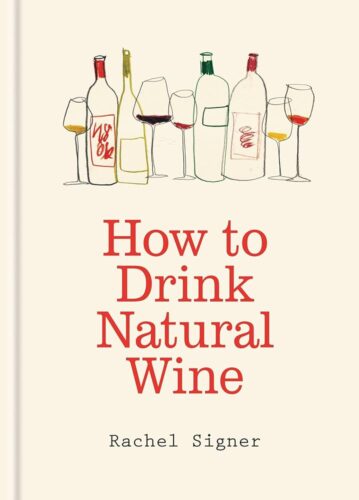
In her new book How To Drink Natural Wine, author Rachel Signer does a very good job of enlightening us about what natural wine is, how it’s made, who makes it.
 She also helpfully covers another important topic: where to drink it. The surroundings may be different from a traditional wine bar or restaurant. Signer explains “a natural wine bar might have a state-of-the-art turntable sound system and serve expensive oysters, but there’s no dress code, and the glassware is simple all-purpose.”
Rather than write from any one country-specific point of view, Signer showcases an international cross-section of natural wine producers, distributors and appreciators. The book contains four sections: What is Natural Wine; From Grape to Glass; Choosing, Pouring, Enjoying; Going Deeper. Each section has ten or twelve sub-sections, clearly labeled. The structure of the book allows readers to dive deep into the entire subject—vineyards, climate, terroir, production and ageing—or simply peruse areas of interest, a few pages at a time.
I’m fascinated by the concept of being able to taste wines today that are as similar as possible to those produced a century or more ago.
However, I also happen to be a fan of modern wines, an appreciator of certain developments that have become common in the last 50 years such as wine cellar hygiene and temperature-controlled fermentation and ageing. Other new technologies including additives such as acidification, color amplification, preservatives, or processes like alcohol “adjustment”, not so much.
While there is a furiously devoted international band of natural wine makers and appreciators, this is a relatively small percentage of wine drinkers. “Natural wine” is not available everywhere, it is produced in small amounts, and often misunderstood by wine drinkers, even devotees of the category. Signer is trying to change this.
Signer is an avowed proponent of natural wines, in all their different styles. She even produces them herself—which I read about in her engrossing, coming-of-age-in-wine tale, You Had Me at Pét-Nat: A Natural Wine-Soaked Memoir.
As a proponent of natural wine, she encourages readers to immerse themselves in this world. But she’s not immune to possible down-sides, advising us that “the gamble is part of the pleasure.”
And all this is what makes reviewing natural wines so challenging for international wine writers.