

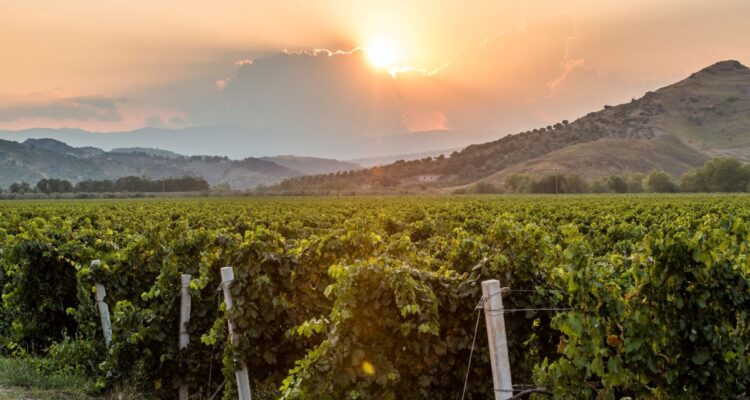
As a leading in wine producer in Italy’s Calabria region, the Librandi Winery is now concerning itself with sustainable agriculture, lowering its carbon footprint and using water responsibly—in addition to continuing to produce award-winning white, rosé and red food-friendly wines.
According to co-owner Paolo Librandi, the Librandi family’s drive toward environmental responsibility has begun to play out relatively recently. This is worth watching because of Librandi’s position in the region, and because, though they produce wine mainly from their estate vineyards, they do partner with other grape growers for certain wines.
The Librandi family’s wine estates are certified sustainable by Equalitas. They have started using regenerative agriculture “to maintain the integrity of their land,” says Paolo. They bottle their wines in lighter glass now. Their center for wine grape research works to protect traditional regional grape varieties from the past, and to analyze the future potential of grape varieties.
To combat climate change, the Librandi family has begun to grow some of their vines in the ancient, low, compact albarello [small tree] shape; not all are vertically trellised on wires as in most modern vineyards. In between rows, they plant cover crops “to create better soil porosity” in order to take advantage of whatever rainfall there is in the Mediterranean climate on this southeastern tip of the Italian mainland.
If you’ve heard of Calabria, it has probably been as a place people emigrated from; it tends not to be a place that attracts tourism, despite its Mediterranean coastline and forested national parks. Calabria has historically been a relatively poor region, where people kept to themselves, making do mainly by subsistence farming, some fishing along the coast and hunting in the inland areas. [See Book Note below.]
 HISTORY
But we’re here to talk about wine—though it doesn’t hurt to have a little context. Such as also knowing that wine has been made here since the Greeks first occupied this region in the eighth century BC, specifically to produce wine.
However, unlike other provinces of Italy, in the intervening centuries Calabria has not been well known for wine production outside the region. Partly because of its traditional tendency toward independence and self-reliance, and partly because basically all the wine made here was consumed within the region. And Paolo says this is still common in Calabria; they haven’t seen the huge contraction in wine consumption that has recently become common in many areas of the world.
I have written about the history of Librandi before—how the family took small, brave steps, starting with acquiring a winery to bottle their own wines in the 1950s, when other families simply made wine for their own households. Their culinary heritage was (and continues to be) that red or rosé wine is an integral part of the meal.
WINES
The Librandi family’s first small winery was eventually so successful that a few decades later they took another innovative step, hiring the first consulting winemaker in Calabria to improve their vineyard and wine quality. They began winning awards for their wines, which opened markets in other countries—even though the grapes they used were indigenous varieties like the red gaglioppo and the white Greco bianco.
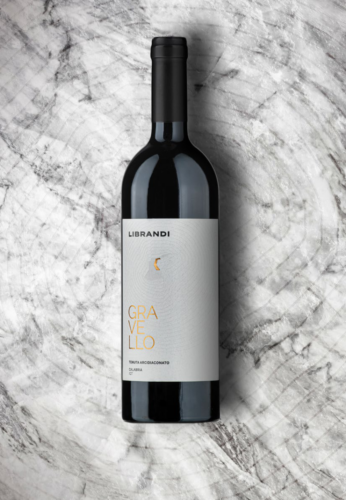 To widen their wines’ appeal, by the 1990s the Librandis had begun growing international varieties like chardonnay, sauvignon blanc, cabernet sauvignon and merlot. The wine that put them on the radar of consumers around the world is the red Gravello, made with both international and indigenous grapes: 60% gaglioppo and 40% cabernet sauvignon. It received its first, prestigious Tre Bicchieri award in 1994 for the 1989 vintage, with more vintage awards following.
Other (less expensive) Librandi wines made with blends of international and native grapes have also been selling well. Like the extremely popular white Critone I recently sampled, which is 90% chardonnay and 10% sauvignon blanc–a versatile white wine made to pair with foods.
While the Librandis produce wines in several sub-regions of Calabria, their heart is in the Cirò DOC region. This summer I also had a chance to try several of their significant Cirò DOC wines made with indigenous grapes. For example Grego bianco grapes are made into the crisp, zingy Cirò DOC Bianco [white]. The Segno Librandi Cirò DOC Rosato [rosé] is made from gaglioppo.
On a recent zoom, Paolo Librandi said that he doesn’t want his rosé to be known as a “baby red” but I think that’s exactly what it is—and this hearty bronze-pink wine should be celebrated as carrying on its job of pairing with the region’s traditional rustic foods.
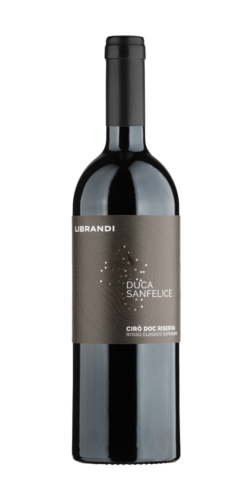
Another flagship wine is the smooth, red Duca Sanfelice Cirò DOC Riserva: 100% gaglioppo grapes. The lush sprinkling of stars on the label shows the locations of the 42 vineyards they buy grapes from—which make up 50% of this blend. To show their partners optimal growing techniques, the Librandis have taken these growers to visit vineyards in various other European wine regions. The result is a rich, approachable red wine, that will also age for many years in the bottle.
Book Note: Calabria’s wildness and self-sufficiency has a dramatic appeal, illustrated in two unforgettable novels by contemporary author Juliet Grames: The Seven or Eight Deaths of Stella Fortuna and The Lost Boy of Santa Chionia.