

Today, we know Venice as the ultimate picturesque tourist destination in Italy. Charming canals, cobbled lanes, café-lined piazzas, tiny boutiques, and delightful trattorias. But for many centuries the Republic of Venice was a powerful, independent city-state, conquering and ruling hundreds of miles of seacoast nations around the Mediterranean.
Those island-dwelling residents of Venice needed wood to build their formidable fighting ships, as well as wine to drink and food to eat. Where did they get their supplies? From a small region on the nearby mainland, the Asolo-Montello area.
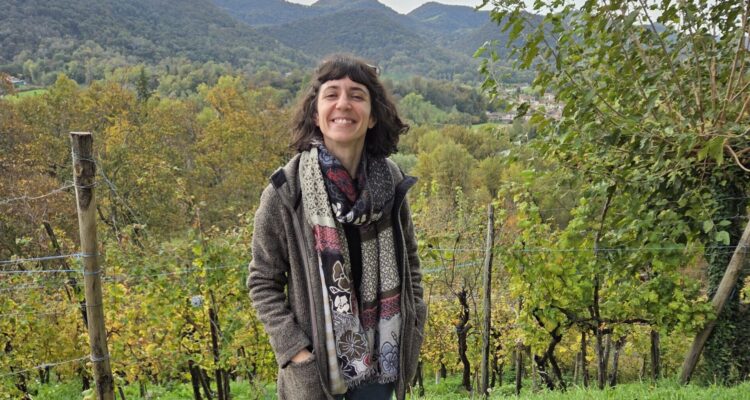
Now Venice has no need for the tall, straight timber from the Montello forests for their ships. However the wines from Asolo-Montello remain popular in Venice. And the attractive town of Asolo is also a favorite getaway for wealthy Venetians, its hilltop location and surrounding vineyards rivaling the landscape of Tuscany. Recently, I visited the area to taste for myself and learn why demand for these wines is increasing.
Asolo and Montello are located on Italy’s mainland, northwest of Venice. Red Bordeaux-variety grapes grow well on the slopes of the Montello mountain and surrounding hills. Montello’s red wines received Montello Rosso DOC status only forty years ago, though red grapes such as cabernet sauvignon, cabernet franc and merlot, have been grown in the area since the 1800s.
While wineries in both Asolo and Montello make excellent DOC-denominated prosecco, Asolo also produces the even more prestigious DOCG prosecco wines. In the past fifteen years, prosecco production in Asolo has skyrocketed from 1 million to over 30 million bottles per year, in all styles including extra brut, brut, extra dry and the artisanal col fondo.
In addition, two local wines made from indigenous grapes are just beginning their comeback: the historically-common red recantina; and the “golden wine” of Asolo which is made with the white bianchetta grape. Bianchetta and recantina are significant not only because they have centuries of tradition behind them but their resilience may hold a key to vineyard survival in this region during climate change.
The red recantina grape was traditionally made into a somewhat sweet wine for everyday drinking in local households. The grape is high in beneficial anthocyanins, and naturally mold-resistant. There is a lot of work still to be done in order to make this into a finer wine, and quite a few wineries are well along on this path. I sampled several, some better than others. For the sake of making a modern dry wine, I do hope producers don’t completely jettison recantina’s delectable fruitiness.
Unlike other skin-contact white grapes that produce “orange wine,” a finished bianchetta wine is gold-colored, which was alluring to the aristocrats in the Middle Ages and Renaissance. Bianchetta is less hardy than some grapes, but grows well in lean soils; the wine is a promising work in progress at various wineries today, desirable for its authentic history in the region.
In a way, the Montello area is protected from climate change the same way it has been for the past 500 years: with irrigation channels. Centuries ago, water from local rivers and underground springs were diverted for agricultural purposes. Impressively, these irrigation canals are still in use today, ensuring the water supply for the region. One morning, we drove along these miniature canals on the hillsides, on the way to Cantine Loredan Gasparini. Winery owner Lorenzo Palla told me he was fascinated to learn there is still a list of all the farmers who have requested the use of this water, over the centuries. His winery is the oldest I visited; below are the stories of a half-dozen family wineries, in the order they were established.
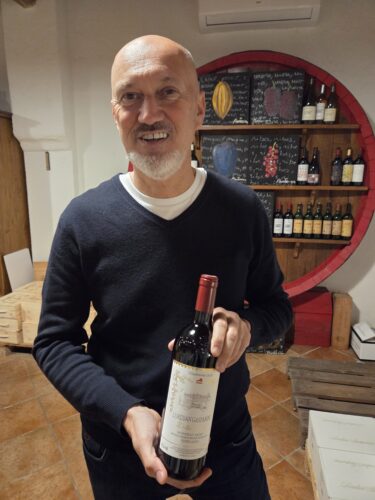
CANTINE LOREDAN GASPARINI [1600s]: a fine, pedigreed winery
Cantine Loredan Gasparini sits high on the Montello mountain. Agricultural production began here in 1371, with the original winery established in the 1600s. In the mid-twentieth century, Count Piero Loredan Gasparini, a descendant of aristocratic Venetian rulers, began making Bordeaux-style wines here. After French president Charles De Gaulle gave the nod of approval to one of the count’s wines, it was renamed Capo di Stato, meaning “Head of State”.
When Lorenzo’s father, Giancarlo Palla, took over the winery and renovated it in the 1970s, he first concentrated on Bordeaux-style blends, and continued to make Capo di Stato his flagship wine. Giancarlo was an innovator as well as a promoter of local wines. He produced the first classic-method sparkling wines in the area, and was a tireless advocate for Asolo’s DOC status and then its higher, DOCG ranking. He also fought for his vineyard lands to receive a denomination of Venegazzù, which is the only declared sub-region in this wine region. Today, Loredan Gasparini’s wines are made using only the proprietary yeasts from their vineyards because these yeasts are capable of naturally fermenting grape must into dry wines.
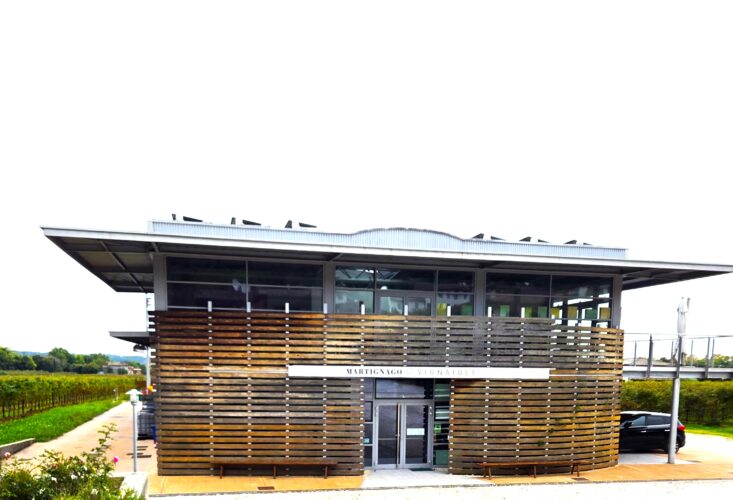
MARTIGNAGO VIGNAIOLI [1853]: savory proseccos and modern reds
Moving forward in history, I visited two quite different wineries where the families have grown grapes in Asolo Montello since the mid-1800s. The first, Martignago Vignaioli is now run by Simone Morlin, who took over the winery when his wife’s father died suddenly in 2010. They have enormous respect for the soil, maximizing its beneficial organisms for the health of the grapes. This has given them great material to make sparkling wines and proseccos in their own style they call “savory prosecco” or prosecco salato; they believe it is more thirst-quenching and easier to drink, whether the style is col fondo, brut or extra brut.
Martignago also continues to produce wines that were well known before the recent rise of prosecco. I sampled their very nice Bordeaux blend and merlot wines which are modern in style, fully realized but with restrained fruit, an umami accent, and soft tannins. The winery is working with recantina, currently producing a sweeter version in recognition of the wine’s tradition.
TENUTA AMADIO [1850]: family first, with excellent, fresh prosecco
Founded in 1850, Tenuta Amadio is currently also working on recantina wines. They now have four vintages of dry but fruity and lightly floral recantina under their belt—a delightful wine.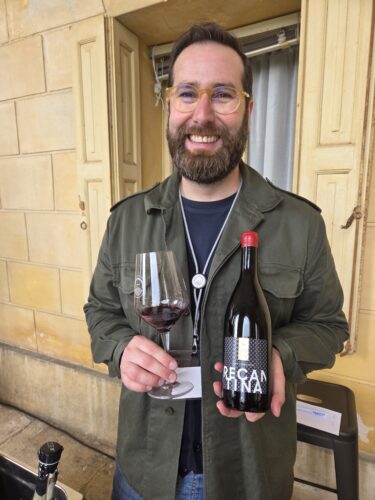
With the indigenous bianchetta grape, Tenuta Amadio also makes an ancestral-style, sparkling wine (known as col fondo or sui lieviti), the way it would have tasted when their family purchased this land over 150 years ago. At that time, they farmed grapevines, olives and vegetables. When grape diseases struck during the second half of the 19th century, they did little with their grapes, instead prioritizing growing their own food.
Fast forward to 2010 when family members (and siblings) Simone and Silvia Resch took over the land. They revitalized the old vineyards; some of their wines are now forty to fifty years old. The winery produces excellent proseccos, some of the finest I had in this region. Whether extra brut, bruit or extra dry, their hallmark is freshness. The wines have light floral and fruit aromas and flavors, and great balance.
DAL BELLO [1906]: family and hard work win the day
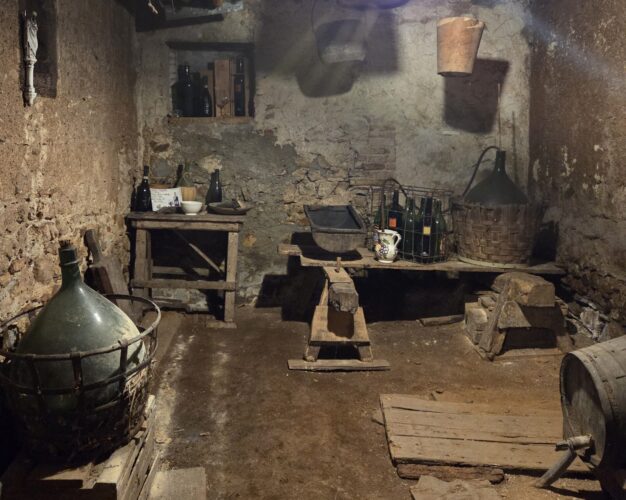
In the early twentieth century, the Dal Bello family relates they belonged to the impoverished class of sharecroppers in the Veneto region, but they had more ambition than most. In 1906 they banded together with two other families to make their own wine–enough to sell a little to others. They built their own barrels, furniture, everything they needed for their households and winery. Today, their rudimentary home has been preserved as a museum for visitors.
Some decades later, the family’s Christmas wines had such a good reputation among their neighbors that Antonio Dal Bello decided to create his own wine business. Knowing there was a lot of competition in Venice, he decided to go in the opposite direction first. So in the 1960s began taking his old World War II-era truck to Milan—at two-day journey at the time—and achieved his first commercial success there.
The family expanded their prosecco production and their market, and today are well known for their popular Celeber prosecco (which is also made in an organic version) as well as other styles of prosecco. Dal Bello also produces several red and white still wines, made with indigenous as well as international grapes. The family is justifiably proud of their success, and when I visited I got the feeling I was among a very hard-working, down-to-earth clan, to this day.
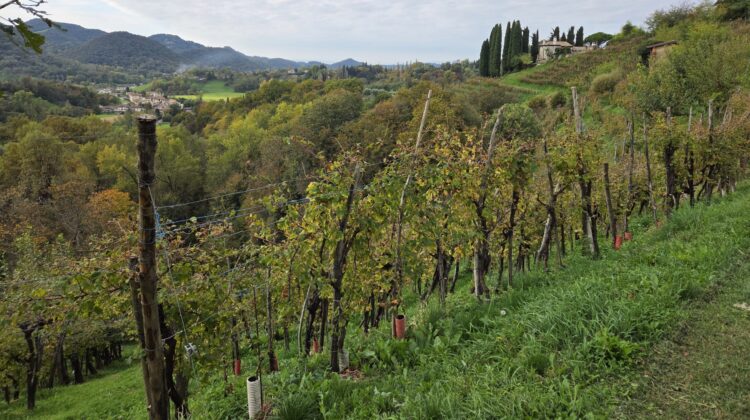
BELE CASEL [1976]: organic proseccos from second-generation wine producers
Back in the mid-1970s, enology student Danilo Ferraro married a woman whose father was a brilliant winemaker. Ilario had only a small vineyard planted with Malvasia grapes, making wine for his household and local consumption. Danilo wanted to make sparkling wine, and the family began to work on this project, with everyone pitching in to grow new grapes, produce the wines, bottle and label them. Then, they spent years trying to sell the wines to a broader market, not very successfully.
After decades, fate finally intervened and the Bele Casel wines were “discovered” by an American importer looking for prosecco. The Bele Casel wines were more interesting because, in addition to the required 85% glera grape, the family (now including adult siblings Paola and Luca Ferraro) also used fractions of little known, indigenous grapes in their blend. Today their prosecco DOCG wines are organic.
GIUSTI [2002]: from rags to riches to helping others
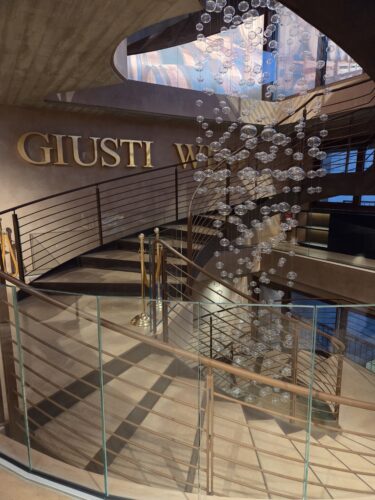
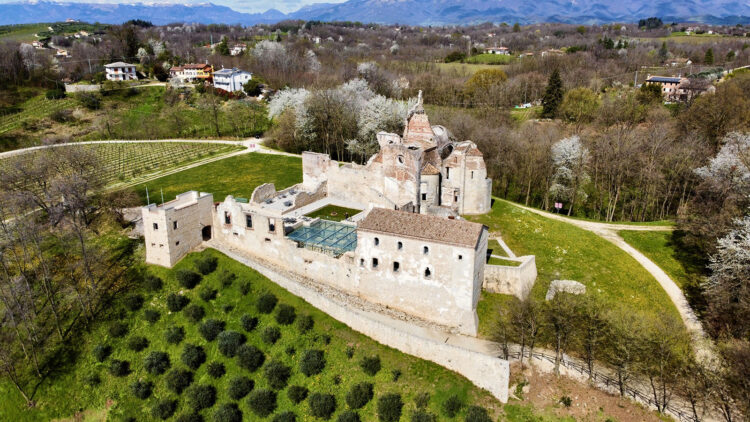
The newest family winery I visited was the impressive Giusti. The owner, Ermenegildo Giusti, is a self-described peasant who went to Canada in the mid-20th century, at the age of 17, to build houses. Several decades later, having become very successful, he returned home and built a winery, where his nephew Gabriele is now the winemaker. In addition, Giusti has forged a remarkable presence in this region. He partnered with the government and funded a remarkable restoration of the 11th century Sant’Eustachio abbey that was heavily damaged in an important, turning-point battle in World War I; this monument is now open to the community, set in fine lawns at the top of an imposing hill.
Giusti produces several styles of recantina wine. Winemaker Gabriele has the resources for quite a bit of experimentation, this being the winery with the most recantina grapes in the area (probably in the world). They are also growing PIWI (special hybrid) grapes, because of climate change. And they produce lovely Bordeaux-style blends, as well as over a dozen sparkling wines, including proseccos, from this area—again, with all the means including temperature and barrel variations, to create their desirable wines.
A FEW NOTABLE WINES FROM THE ASOLO AND MONTELLO WINERIES
Bele Casel: The 2020 Caranto made with the indigenous bianchetta grape has intriguing aromas of peeled pear and wood, with other stone fruits and minerality joining in the flavors. This is a difficult wine to make, but the Bele Casel winery is persisting and may release a 2022 soon.
Dal Bello: 2025 Prosecco demi-sec—looking forward to this rare style that is set to be released soon.
Giusti: The 2021 Umberto I is excellent, light and floaty. A Bordeaux blend, it is made with 60% merlot and 40% cabernet sauvignon. This wine is not made every year, only in the best vintages.
Loredan Gasparini: 2019 Capo di Stato Montello Asolo DOC Venegazzù Superiore. The wine has a velvety feel, dark red fruit, and light, sticky tannins that will continue to soften with age. The grapes come from the original 1946 vineyard containing cabernet sauvignon, cabernet franc, merlot and malbec. They are harvested in the traditional field blend method, which means all harvested at the same time—a concept which has always fascinated me, because drinking a wine like this is like drinking history.
Martignago: 2020 Montello Rosso DOC, made with 70% cabernet sauvignon and 30% merlot. Hints of blackberry in this linear wine, not too fruity, with soft tannins; a very modern style.
Tenuta Amadio: Asolo Prosecco Superiore Brut DOCG. This wine was a simple, wonderful pleasure. An aroma of fresh, wildflower fields and a body with brilliant balance. Additional Tenuta Amadio recommended wines: Asolo Prosecco DOCG Superiore Extra Brut, with fruit underlying fresh florals, strong citrus notes and a dry finish that leaves your throat wanting more; and the Asolo Prosecco Superiore DOCG Extra Dry, with an aroma of white flowers and fresh linen, flavors filled with exotic fruits, and apricot acidity in a long finish.